

Quick Links
- The Uncomfortable Gap
- 1. You Can Share Your Website Without Apologizing for It First
- 2. You Stop Losing Deals to Competitors Who Look More Credible
- 3. Your Customers’ Children Know You Exist
- 4. Your Brand Truly Honors What the Founder Built
- 5. When It’s Time to Sell or Pass On, What You’ve Built Is Clear
- What Modernizing a Legacy Brand Means
- Frequently Asked Questions
The Uncomfortable Gap Between Who You Are and What You Present
There is a specific kind of uncomfortable moment that owners of legacy businesses know well. Someone — a prospect, a referral, a potential partner — looks up the company before a meeting. And what they find doesn’t match what the company actually is.
Maybe the website is fifteen years old. Maybe there’s barely any content at all. Maybe the visual identity hasn’t been touched since the founder was running things and nobody has wanted to be the person who changes it. Whatever the specifics, the result is the same: a company with decades of real expertise, genuine customer loyalty, and a reputation earned through actual work is being represented online by something that doesn’t come close to reflecting what it’s worth.
This is the legacy brand gap. And it’s uncomfortable to talk about for a specific reason: modernizing the brand can feel like criticizing the people who built it. Like saying what they created wasn’t good enough. Like choosing the new version of the company over the one that actually built the reputation.
That’s not what modernization is. It’s the opposite. The brand your founder built deserves to be presented at the level it actually is. Making it appealing to the prospects who didn’t grow up with your name and introducing yourself to the next generation of buyers who will find you by searching isn’t changing what the company is. It’s helping it live on for another decade and beyond.
Here are five reasons to close the gap and start showing up as your next best self.
Reason 1: You Can Share Your Website Without Apologizing for It
The Disclaimer You’ve Gotten Used to Giving
If you’ve ever sent a prospect your website and then immediately followed it with “it’s a little outdated, but…” — you already know this reason. That disclaimer is doing real work. It’s managing expectations before someone sees something that doesn’t match what you just told them in the meeting.
Most legacy brand owners have a version of this. They’re proud of the work. They’re proud of the company. They are not proud of how it looks online, and they’ve quietly accepted that the solution is context-setting rather than fixing the underlying problem.
When the Brand Finally Tells the Real Story
Our client, BMB Industrial Cabs, manufactures precision-engineered cabs for industrial vehicles like forklifts, tractors, and specialist machinery. They’re a UK-based manufacturer with a long track record of building products that hold up in the kinds of environments most industrial equipment doesn’t survive. The quality is real and their expertise is genuine.
When we started working with them, their digital presence didn’t reflect any of that. There was no way for a buyer to land on the website and quickly understand what BMB makes, who it’s for, and why it’s worth choosing over a cheaper alternative.
We built a new brand identity — new logo, new color system, new typography — and a new website that finally communicated what the company actually is. Clean. Specific. Trust building. Built for the buyer who has never heard of BMB and needs to understand the value proposition in the first thirty seconds.
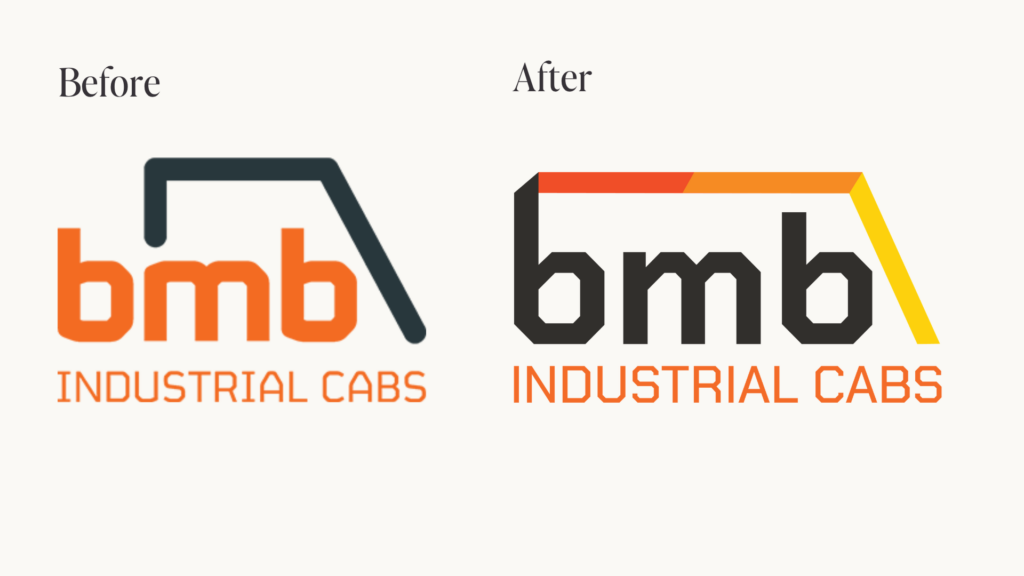
But here’s what matters more than how it looks: the new website has a “Request a Quote” form. And buyers are using it.
An inbound lead form submission from a new prospect, someone who found BMB from a Google search (thanks SEO!), understood what they made, and decided to reach out without a phone introduction from anyone. That was not happening before. The brand made it possible for the website to be worth visiting. The website made it possible for the buyer to say yes. The positioning work that happened before either of them is what made the buyer understand what they were saying yes to.
That’s the full stack of what a legacy brand modernization actually produces. The logo is the part you can see. The lead is the part that matters.
Side note: the disclaimer habit is easy to develop and surprisingly hard to break. Once the brand catches up to the company, you notice how long you’d been pre-apologizing for something that was fixable.
Reason 2: You Stop Losing Deals to Competitors Who Look More Credible. Even When Your Work Is So Much Better
That’s gotta hurt…
There’s something uniquely frustrating about losing a deal to a competitor you know does inferior work. Especially when you also know exactly why it happened. They’re not better, they just look better. They’re all hat, no cattle, but nobody knows it because their website is clean, their LinkedIn is active and their name came up when someone searched the category. Yours isn’t and didn’t.
This happens constantly in legacy industries. The newer entrant invests in brand and digital presence. The established player relies on the reputation they’ve built. And the buyer who doesn’t already know the established player finds the newer one first — and often doesn’t go looking any further.
ChatGPT doesn’t know about your company history
Our new-ish client Goch & Sons situation is a clean illustration of this. JT Crova Towing — a competitor — was showing up in AI comparisons in ways that weren’t favorable to Goch & Sons, despite the fact that the negative situations being surfaced were largely caused by the competitor, not by the client. The 100-year legacy wasn’t being told anywhere online in a way that AI engines could find and use. The story that would differentiate Goch & Sons — the history, the service record, the community presence — had no digital surface area.
In any market where buyers research before they call, the company that tells its story online shapes what buyers think before the conversation starts. A legacy brand that doesn’t tell its story is ceding that ground to whoever does — including competitors who have less of a story to tell.
Reason 3: Your Customers’ Children Know You Exist — Without Needing an Introduction From Their Parents
The Relationship Has an Expiration Date
Every long-term relationship a legacy business has built will eventually pass to the next generation. The procurement manager who has worked with you for twenty years will retire. The business owner who has referred you for a decade will pass the company to someone new. The loyal customer who has never considered a competitor will age out of the buying decision.
When that transition happens, the question is whether the next person in that seat knows your name. And more specifically: can they find you on their own?
In most legacy businesses, the honest answer is no. The relationship was personal. It lived in someone’s rolodex, in a referral, in a handshake at a trade show a decade ago. The next generation has none of that context. They’ll search. And if you’re not there, the relationship ends — not because anyone chose to end it, but because it couldn’t survive the transition.
The Search Moment Nobody Saw Coming
We work with precision manufacturers whose customer base is primarily engineers and procurement professionals who have worked with them for years. That relationship is strong. What it isn’t is transferable by default.
When a long-term customer retires and their successor goes looking for the vendors on the approved list, they’re going to search. They’re going to look at the website. They’re going to check LinkedIn. If what they find doesn’t signal credibility — or worse, if they find very little — they’ll have a hard time justifying the relationship to their own leadership. Why this vendor and not a competitor who looks more current?
The relationship your founder built, and the relationship you’ve maintained, is a genuine asset. Making sure it survives a generational handoff requires that the new person can find you independently and understand your value without someone to vouch for you in person. That’s what a modern brand does. It vouches for you when you’re not in the room.
Reason 4: The Brand Finally Honors What the Founder Built, Instead of Understating It
Honestly, This is The Most Important Reason. Honoring Legacy.
Every other reason on this list is practical. This one is personal.
The people who built legacy businesses worked for decades. They built real expertise, real reputations, real customer relationships. What they often didn’t build — because the tools weren’t there, or the time wasn’t there, or self-promotion felt like bragging — was a brand that fully represented what they accomplished.
The current owner inherits a business that is genuinely excellent and is presented as something less than that. And there’s often an unspoken feeling that changing it would be disloyal. That modernizing means saying the old version wasn’t good enough.
That’s just not the case. It’s a way to carry on the hard work, legacy and grit that the founder put in to building something worth carrying on.
When the Credential Finally Shows Up
Manson Reamers — a precision manufacturer we work with — does an excellent job of honoring tradition. Founded by legend Dave Manson (IYKYK), Manson Reamers has a powerful reputation as the best in the gunsmithing tools business. When Dave sold the company to the new owners, our clients in 2022, they invested in a new e-commerce website with live inventory – a big deal in their space, a new brand, and they invested in partnerships like becoming the official chamber reamer and headspace gage for the Precision Rifle Series, one of the most prestigious competitive shooting organizations in the country. That’s a credential. That’s a signal that says, without any marketing language at all, that the people who know this industry best trust Manson Reamers above every other option.
That kind of credential deserves a platform. It deserves to show up when a buyer searches for what Manson makes. It deserves to be the first thing someone sees when they’re evaluating vendors. The founder built the expertise that earned that endorsement over decades of work. The brand’s job is to make sure that work is visible — not to replace it, not to reinvent it, but to present it at the level it actually deserves.
We think Dave would be proud. In fact, we know he is.
Side note: this is the version of modernization that legacy brand owners actually want, even when they can’t articulate it exactly. Not a rebrand that erases the history. A reclaim that finally shows it.
Reason 5: When It’s Time to Sell or Pass On, The Value is Apparent
Brand Equity Is a Real Number
When a business goes through a transaction — whether that’s an acquisition, a succession plan, or a sale — the brand is evaluated. Not just the P&L. The brand.
An acquirer looking at two otherwise similar businesses will discount the one whose brand is invisible, underdocumented, and entirely dependent on personal relationships that may not transfer. The value that lives in a founder’s network, in a handshake, in a phone number saved in a long-term customer’s contacts — that value is real, but it’s also illiquid. It doesn’t show up on a balance sheet in a way that’s useful to someone trying to determine what the business is worth.
A documented, visible brand — one with an online presence, a content foundation, a review base, and a story that a buyer can read before they call — is worth more. It’s valuable because it made that equity legible to someone who wasn’t there when it was built.
Building Value in a Family of Companies
We work with the leadership team at a group of precision manufacturing companies — a family-run operation with multiple entities, each with their own legacy and customer relationships. Over the course of our engagement, the conversations about marketing have frequently touched on enterprise value: what makes these companies worth more, what makes them easier to pass on, what the next ten years of growth looks like.
A legacy manufacturer with documented marketing assets, a consistent online presence, and a brand that communicates its value to buyers who don’t already know it is more resilient in any transaction. The relationships don’t go away — they get supplemented by a foundation that doesn’t depend on any single person staying in their seat.
And sometimes, you also need a really sweet new logo.
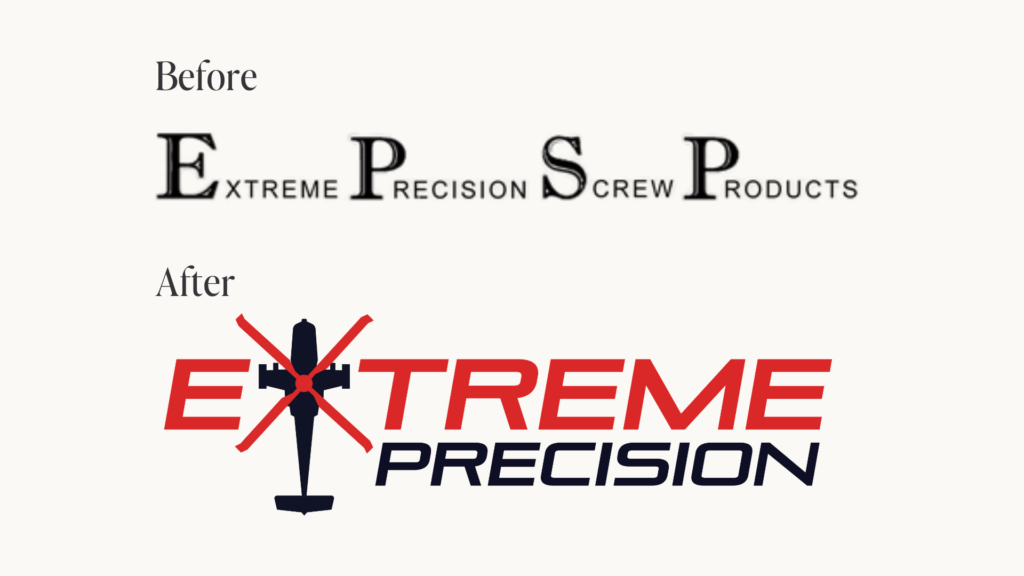
For second-generation owners who have added real things to what they inherited — new capabilities, new markets, new credibility — the brand should reflect that too. Not just what the company was when you received it. What it became under your leadership. That’s what you built. And it deserves to be visible.
What Modernizing a Legacy Brand Actually Means
It doesn’t mean starting over. It doesn’t mean erasing the history. It doesn’t mean bringing in someone who wants to blow it up and rebuild from scratch in a way that removes everything that made it worth inheriting.
What it means — done correctly — is making the company legible to the people who don’t already know it. Telling the story that earned the reputation. Building the digital foundation that lets the next generation of buyers find you without a personal introduction. Presenting what the company actually is at the level it actually deserves.
The fear most legacy brand owners carry into this process is betrayal — that changing the brand means disrespecting the person who built it. The reality, almost always, is the opposite. The founders who built these businesses worked too hard, and built something too good, to have it represented by something that doesn’t come close to showing what it’s worth.
If you’re carrying that quiet, persistent feeling that the brand isn’t doing the company justice — you’re probably right. Start the conversation here. And if you want to understand how we approach brand and marketing strategy for companies with real history and real stakes, that’s where we start.
Frequently Asked Questions
We’ve been in business for decades without a modern brand. Why change now? Because the way buyers find and evaluate companies has changed, even if your company hasn’t. The buyer who was referred to you by someone who knows you personally is still a great buyer. The buyer who searches for what you do and can’t find you — or finds you and sees something that doesn’t reflect what you are — is a buyer you’re losing without knowing it. The question isn’t whether the old way worked. It’s whether it’s still the only way you’re willing to grow.
How do I modernize the brand without alienating long-term customers or the founder? By leading with preservation before change. The right process starts with understanding what makes the company worth inheriting — the values, the history, the specific things that long-term customers trust — before it touches anything visual or verbal. A brand modernization that honors those things will not alienate the people who built them. It will make them proud. The version that alienates people is the one that skips that step. We don’t skip that step.
We have a good reputation in our market. Isn’t that enough? A reputation that only exists in the minds of people who already know you is a reputation with a ceiling. It can’t grow beyond your existing network. It can’t survive a generational handoff without help. And it can’t defend you against a competitor who has less of it but tells their story more consistently. Your reputation is the asset. The brand is how you protect and extend it.
What’s the difference between a rebrand and what you’re describing? A rebrand starts with visual identity and works backward. What we’re describing starts with strategic clarity — understanding what the company actually is, who it serves, what makes it worth choosing — and builds from there. For legacy brands, this usually means the visual work is evolutionary, not revolutionary. The logo doesn’t disappear. The history doesn’t get erased. The story just finally gets told in a way that reaches people who weren’t there for the founding.
We’ve worked with marketing agencies before and it felt like they didn’t understand what was at stake. That’s the most common thing we hear from second-generation owners. Agencies approach legacy brands as aesthetic projects. The website gets prettier. The logo gets cleaner. And nothing actually changes about whether buyers can find you, understand your value, or trust what they see. The work that matters for a legacy brand is strategic before it’s creative — and it requires a partner who understands that the history is an asset, not an obstacle. That’s the version of this we build.
How does brand modernization affect business value at sale or succession? Brand equity is a real component of business valuation, even if it’s not always explicitly labeled as such. A business whose value lives entirely in personal relationships — in the founder’s network, in handshakes, in contacts that may not transfer — is worth less than one that has documented, scalable marketing assets. An active online presence, a content foundation, a review base, and a brand that communicates value to buyers who don’t already know the company all contribute to a more transferable, more defensible valuation. It’s not the only thing that matters. But it’s not nothing either.












Read the Comments +